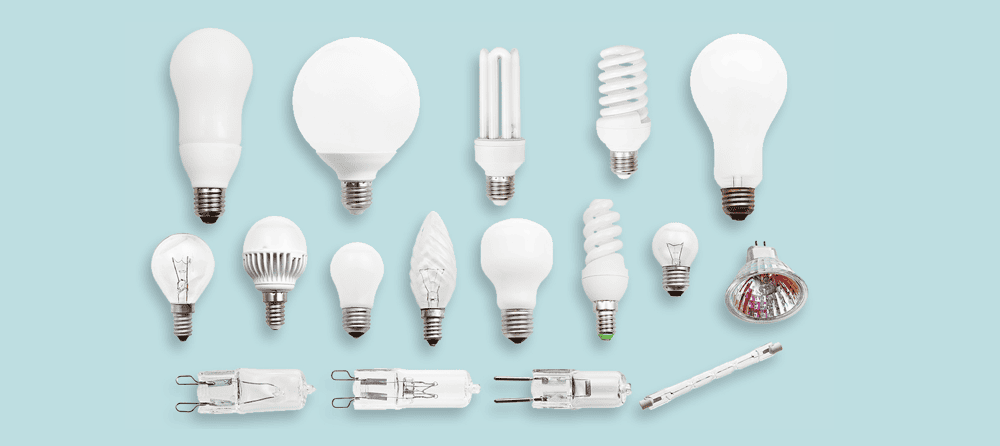
Choosing the right light bulb may seem like a simple task, but the wide variety of types, bases, and technologies available on the market can be confusing. In this article, we offer a detailed guide on the different types of light bulbs and bases, how to identify the bulb your lamp uses, and provide 3 useful tips for selecting the best option according to your needs.
Types of bases
The base is the part of the bulb that connects to the socket. Knowing the type of base is essential to ensure that the bulb fits correctly into your lamp.
1. Edison base (E)
- E27: Also known as the standard screw base, it is the most common in ceiling and floor lamps.

- E14: Known as the small screw base, it is used in smaller lamps such as wall sconces or table lamps.

- E40: Used in industrial lighting or in large-sized lamps.

2. Bayonet base (B)
- B22: Known as the standard bayonet, it is common in some European countries and in specific applications.

3. Pin bases
- GU10: Used in recessed spotlights and downlights.

- GU5.3: Similar to the GU10 but with thinner pins; it requires a transformer.

- G9: Used in designer lamps and small dimensions.

- G4: Used in decorative luminaires and furniture.

Special bases
- R7s: For linear bulbs, common in floodlights and wall sconces.

- GX53: Used in ultra-thin lamps and surface-mounted downlights.
Types of light bulbs
In addition to the base, light bulbs differ by their shape, technology, and specific use. Below, we detail the main types available on the market.
Incandescent bulbs
Incandescent bulbs are the traditional ones with a tungsten filament. They are currently out of use due to their low energy efficiency and short lifespan. In many countries, they have been withdrawn from the market.
Halogen bulbs
They are an evolution of incandescent bulbs; they offer a brighter light and a slightly longer lifespan, but they remain less efficient compared to other technologies.
Energy-saving bulbs (CFL)
Also known as compact fluorescent bulbs, they consume less energy and have a longer lifespan than incandescent bulbs. They contain mercury and their light can take time to reach full brightness.
LED bulbs
LED technology is the most efficient and durable. It offers multiple advantages:
- Energy efficiency: They consume up to 80% less than incandescent bulbs.
- Long lifespan: They can last up to 25,000 hours.
- Variety of colors and temperatures: Available in warm, neutral, and cool light.
- Instant start: They reach their full brightness instantly.
Discover more information about the benefits of LED bulbs in this article.
LED bulbsSmart bulbs
They integrate LED technology with connectivity. They allow you to control lighting through mobile devices, adjust colors and intensities, and schedule on/off times.
Smart bulbsLight bulb shapes
Bulbs come in various shapes, adapted to different uses and styles:
- Spherical: Ideal for decorative lamps and small spaces. (These are the most classic)
- Candle: Used in chandeliers and wall sconces.
- Globe: Larger in size, perfect for hanging and decorative lamps.
- Reflector (R): Direct light to a specific point, used in spotlights and downlights.
- Tubular: Common in sconces and linear luminaires.

How to identify the bulb your lamp uses
To replace a bulb correctly, it is essential to identify the type of base and technical specifications (as we explained above). Here we explain how to do it:
1. Remove the old bulb
With the lamp off and cool, remove the used bulb. Observe the base and the shape of the bulb.
2. Read the specifications
On the bulb body, data such as the type of base (E27, GU10, etc.), power (in watts), and voltage usually appear.
3. Observe the shape and size
Take the shape and dimensions into account to ensure that the new bulb will fit correctly in the lamp.
4. Consult the manual or the manufacturer
If you have doubts, check the lamp manual or consult the manufacturer for precise information.
Tip: Send a photo of the old bulb to TiendaManilla so we can advise you on choosing the new one.
3 useful tips for choosing the right bulb
1. Consider energy efficiency
Opt for LED bulbs to reduce electricity consumption and save on your power bill. Although their initial price is higher, their long lifespan and low consumption compensate for the investment.
2. Choose the right color temperature
Color temperature affects the ambiance of the room:
- Warm light (2700K - 3000K): Ideal for cozy environments such as living rooms and bedrooms.
- Neutral light (4000K): Appropriate for kitchens and bathrooms.
- Cool light (5000K - 6500K): Recommended for work and study areas.
You have here an article to learn how to choose the appropriate lighting for each room and space.
3. Keep the luminous flux in mind
The luminous flux, measured in lumens (lm), determines the amount of light the bulb emits. The higher the number of lumens, the brighter the light will be. Select the bulb with the appropriate flux according to the lighting needs of the space.

Conclusion
Knowing the different types of bulbs and bases is essential for choosing the most suitable option for your home. Take into account energy efficiency, color temperature, and luminous flux to make an informed decision.
At TiendaManilla, we have a wide catalog of bulbs and lighting accessories. Our team is ready to advise you on everything you need to light your home efficiently and with style.
Find the ideal bulb for every space in your home.
Bulbs